

Getting out of a car with back pain can be surprisingly difficult. If you experience lower back stiffness, sciatica, hip discomfort, or spinal arthritis, the simple act of turning your body and standing up can trigger pain. The good news is that getting out of a car with back pain may become more manageable when you adjust your seat, control your movements, and avoid unnecessary twisting.
As a doctor, I believe that understanding everyday movement is just as important as choosing comfortable vehicles. Many drivers focus on lumbar support and seat cushioning, but they overlook what happens when they leave the car. This guide explains practical techniques, seat adjustments, and warning signs that can help you move more comfortably.
These suggestions provide general educational guidance. They do not replace an individual medical assessment, particularly if your pain is severe or persistent.
Why Getting Out of a Car With Back Pain Can Be Difficult

Getting out of a car involves several movements at once. You must rotate your trunk, move your legs, shift your body weight, and rise from a seated position. When your lower back or hips feel stiff, these movements may become uncomfortable.
1. Prolonged sitting can increase stiffness
During a long drive, you maintain a relatively fixed posture. Your back and hip muscles may become fatigued, and your joints may feel stiff when you finally stand.
The US National Institute for Occupational Safety and Health identifies prolonged sitting, awkward postures, and whole-body vibration among factors associated with musculoskeletal discomfort. These factors matter particularly to people who spend many hours driving.
2. Twisting can aggravate existing symptoms
Many drivers open the door and immediately swing one leg out while keeping their upper body facing forward. This movement rotates the trunk and pelvis in different directions.
Some people tolerate this movement without difficulty. However, those with existing back pain may find it uncomfortable. Moving the legs and trunk together can reduce unnecessary twisting.
3. Low seats can make standing harder
A low car seat places your hips below your knees. You may need to lean forward and generate more force through your legs to stand.
People with back pain, hip arthritis, knee problems, or reduced leg strength may find this movement particularly challenging.
4. Vehicle design affects comfort
Seat height, door opening, steering-wheel clearance, and the space available for your legs all influence how easily you can leave a vehicle.
A vehicle that feels comfortable while driving may still be difficult to enter or exit. Therefore, evaluate both driving comfort and accessibility when choosing a car.
How to Get Out of a Car With Back Pain Safely
The following technique offers a practical starting point for many people with uncomplicated back discomfort. Adapt it to your mobility, symptoms, and vehicle design.
Step 1: Park safely and prepare to exit
Stop in a safe location, apply the parking brake, and switch off the engine when appropriate.
Before moving, check that the ground outside the door is level and free of obstacles. Avoid rushing, especially after a long drive.
If you feel dizzy, weak, or unable to support your weight, do not attempt to stand without assistance.
Step 2: Move your body towards the edge of the seat
Move your hips towards the front of the seat using small, controlled movements.
Avoid suddenly pulling your upper body forward or twisting sharply. If your seat has a large side bolster, move gradually rather than forcing your hips over it.
Keep your movements comfortable. Stop if a particular movement produces sharp or spreading pain.
Step 3: Turn your trunk and legs together
Instead of rotating your shoulders while your pelvis remains fixed, gently turn your trunk and legs in the same direction.
Move your feet towards the open doorway together as far as your mobility allows. You do not need to force your knees or hips into a particular angle.
This seated-pivot technique can reduce the amount of separate trunk rotation required during the exit.
Step 4: Place both feet firmly on the ground
Bring your feet into a stable position outside the vehicle. Keep them approximately hip-width apart if that feels comfortable.
Check that your shoes have a firm grip and that the ground is not slippery.
If you have severe knee or hip pain, adjust your foot placement to a position that allows you to stand without excessive discomfort.
Step 5: Use your legs and a stable support
Lean forward slightly from your hips, keeping your movement controlled. Push through your legs to rise.
You may use a suitable, fixed support for balance if it is designed to bear your weight. Avoid pulling hard on a door that may move or using a loose object as a handhold.
If you cannot stand without significant pain, ask for appropriate assistance rather than forcing the movement.
Step 6: Pause before walking
Once you stand, take a moment to regain your balance. Straighten gradually if you feel stiff.
Start walking only when you feel stable. If pain travels down your leg, your leg feels weak, or you experience unusual numbness, stop and assess your symptoms.
How to Adjust Your Car Seat to Make Exiting Easier
Correct seat adjustment can make both driving and getting out more comfortable. No single setting suits everyone, so test each adjustment while the vehicle is stationary.
Choose a suitable seat height
A seat that allows you to stand without excessive effort may help if you have back, hip, or knee discomfort.
When possible, position your hips at approximately the same height as your knees or slightly higher, provided you can still reach the pedals safely.
Do not raise the seat so much that your head approaches the roof or your visibility becomes restricted.
Adjust the seat back
A slightly reclined seat back may feel more comfortable than sitting bolt upright or slouching deeply. Find a position that supports your back while allowing you to maintain control of the vehicle.
After adjusting the seat back, check that you can reach the steering wheel and pedals without stretching.
Use lumbar support appropriately
If your vehicle has adjustable lumbar support, position it to support the natural curve of your lower back without creating uncomfortable pressure.
More support is not always better. Excessive pressure can make some people feel worse.
You can read our guide to the best cars for back pain in 2026 to explore vehicle features that may influence comfort.
Keep your seat cushion comfortable
A suitable cushion may improve comfort for some drivers, but it should not destabilize your sitting position or interfere with safe pedal operation.
Read our car seat cushion buyer’s guide before choosing an additional cushion.
What If You Have Sciatica?
Sciatica describes pain associated with irritation or compression of the sciatic nerve or its contributing nerve roots. Symptoms may travel from the lower back or buttock into the leg.
Some people experience tingling, numbness, or weakness as well as pain. Prolonged sitting may aggravate symptoms in certain individuals, although triggers vary.
If you have sciatica, consider these practical measures:
- Move slowly when turning towards the doorway.
- Avoid forcing your back into a deep bend or twist.
- Place your feet securely before standing.
- Use a stable support if you need help with balance.
- Take regular movement breaks during longer journeys, stopping somewhere safe.
- Discuss persistent symptoms with a qualified healthcare professional.
Do not assume that every episode of leg pain comes from sciatica. Hip disorders, muscle problems, and other medical conditions can cause similar symptoms.
Read our doctor’s guide to driving with sciatica for further information about seat setup and driving comfort.
Does Your Choice of Car Matter?
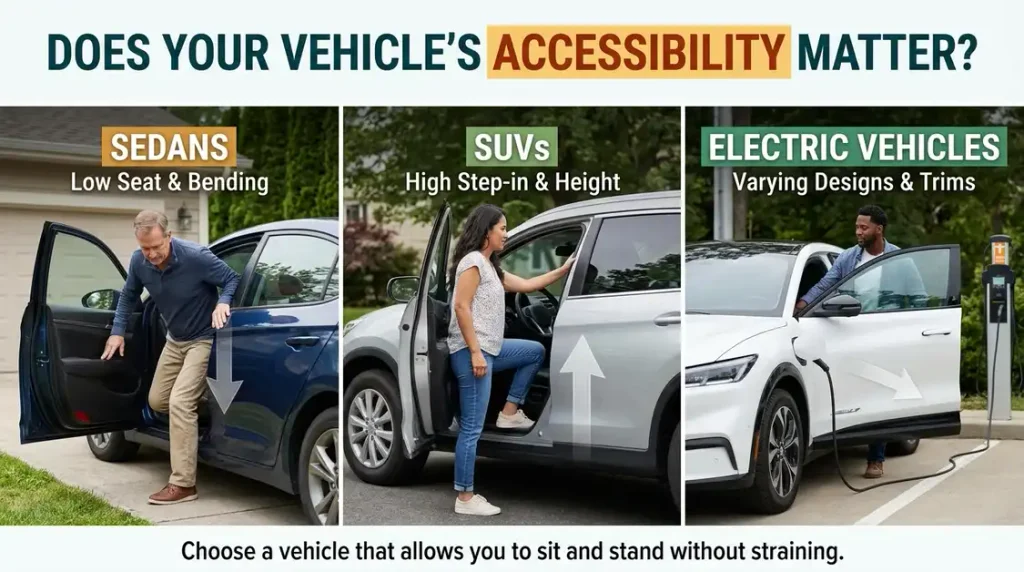
Yes. Vehicle accessibility can influence how much effort you need to enter and exit, although individual comfort depends on your body, mobility, and medical condition.
Sedans
Some sedans have low seats and narrow door openings. These features can make entry and exit harder for people who struggle to bend their hips or rise from a low position.
However, many sedans provide supportive seats and adjustable driving positions. Always test the actual vehicle rather than judging it by body style alone.
SUV
An SUV may provide a more convenient seat height for some drivers. However, a high step into the cabin can create a different challenge, especially for people with hip or knee problems.
Choose a vehicle that allows you to sit down and stand up without climbing excessively or dropping heavily into the seat.
Electric vehicles
Electric vehicles vary considerably in seat height, floor design, door openings, and cabin layout. Do not assume that an electric vehicle automatically provides better back support.
Test the driver’s seat and exit movement in the exact model and trim you plan to buy.
Our Kia Sportage health review illustrates how vehicle ergonomics can be considered alongside other comfort factors.
Can a Seat Cushion Help You Get Out of a Car?
A seat cushion may help some people feel more comfortable during a journey. However, it does not automatically make exiting easier.
A thick cushion can raise your seating position, which may help some drivers. It can also change your relationship with the pedals, steering wheel, seat belt, and head restraint.
Before using one, confirm that it remains secure and does not interfere with the vehicle’s safety systems. Follow the vehicle manufacturer’s guidance.
Choose a cushion based on your symptoms and comfort rather than assuming that memory foam, gel, or a particular thickness will work for everyone.
If your pain continues despite adjusting your seat, consider a clinical assessment instead of repeatedly buying different accessories.
How Often Should You Take Breaks During Long Drives?
There is no single break interval that suits every driver with back pain. Your symptoms, journey length, driving conditions, and medical advice all matter.
During long journeys, plan safe stops so that you can stand, walk briefly, and change your posture. Do not wait until pain becomes severe before considering a break.
If you drive professionally, review your work schedule and opportunities for movement. Research from NIOSH highlights the musculoskeletal concerns associated with prolonged driving and whole-body vibration, particularly for transportation workers.
Never stop in a dangerous location just to stretch. Choose a safe parking area and remain alert to traffic and your surroundings.
When Should You Seek Medical Attention?
Most episodes of back discomfort do not indicate a medical emergency. However, certain symptoms require urgent assessment.
Seek emergency medical care if back pain occurs with any of the following:
- New difficulty controlling your bladder or bowel.
- New numbness around the groin, genitals, or saddle area.
- Severe or progressive weakness in one or both legs.
- Significant symptoms affecting both legs, particularly with new neurological changes.
These symptoms may indicate a serious problem involving the nerves of the lower spine.
Seek prompt medical advice if your pain follows a significant injury, accompanies fever or unexplained illness, continues to worsen, or repeatedly interferes with daily activities.
A healthcare professional can assess your symptoms and decide whether you need further investigation or treatment.
Research Findings: What Does the Evidence Tell Us?
Several established findings help explain why driving can aggravate discomfort and why movement strategies deserve attention.
1. Prolonged sitting is a recognised ergonomic concern. The National Institute for Occupational Safety and Health identifies prolonged sitting and static postures among factors associated with musculoskeletal problems. This supports avoiding unnecessarily long periods in one fixed position.
2. Awkward posture and vibration can contribute to physical strain. NIOSH describes whole-body vibration as a relevant concern for drivers, particularly people who spend long hours operating vehicles. Vehicle design and seat characteristics can influence exposure.
3. Ergonomics should fit the individual. The CDC explains that ergonomic principles aim to adapt tasks and environments to people’s capabilities. In practical terms, seat settings and exit techniques should suit your body and limitations rather than follow one rigid rule.
4. No single adjustment works for everyone. The evidence does not establish that one seat height, cushion, or exit technique cures back pain. Personal symptoms, underlying conditions, and functional ability all influence the best approach.
Explore these authoritative resources:
- CDC/NIOSH: Ergonomics and musculoskeletal disorders
- CDC/NIOSH: Whole-body vibration and bus drivers
- Mayo Clinic: Back pain information
These sources support general ergonomic advice. They do not prove that the specific seated-pivot technique described in this article prevents injury or treats a spinal condition.
Frequently Asked Questions
What is the best way to get out of a car with back pain?
Move towards the seat edge, turn your legs and trunk together, place your feet securely on the ground, and stand using a controlled movement. Adapt the technique to your symptoms and mobility.
Why does my lower back hurt when I stand up after driving?
Prolonged sitting, muscle stiffness, posture, and existing back or hip conditions may contribute. Persistent or worsening pain deserves a medical assessment.
Is an SUV better than a sedan for back pain?
Not necessarily. An SUV may offer a convenient seating height, while a sedan may provide supportive seats and easier access for some people. Test the actual vehicle.
Should I use lumbar support when driving?
Lumbar support may improve comfort if it fits your back appropriately. Adjust it gently and avoid excessive pressure.
Can sciatica make it difficult to leave a car?
Yes. Pain, tingling, numbness, or weakness associated with sciatica may make turning and standing difficult. Seek medical advice if symptoms persist or interfere with normal movement.
Should I stretch immediately after getting out of the car?
Gentle movement may help some people feel less stiff, but avoid forcing a stretch that causes pain. If you have a diagnosed condition, follow your clinician’s advice.
When should I stop driving because of back pain?
Do not continue driving if pain, weakness, numbness, or restricted movement prevents you from operating the vehicle safely. Arrange a safe stop and seek appropriate medical advice.
Final Verdict
Getting out of a car with back pain can be uncomfortable, but small changes may make the movement more manageable. Move slowly, avoid unnecessary twisting, position your feet securely, and use suitable support when standing.
Remember that seat height, lumbar support, and vehicle accessibility all influence comfort, but no car or accessory guarantees freedom from pain.
If symptoms persist, worsen, or affect your ability to walk safely, consult a qualified healthcare professional. The goal is not simply to make driving comfortable; it is to help you move safely throughout your daily life.
Medical disclaimer: This article provides general educational information and does not replace professional medical advice, diagnosis, or treatment.