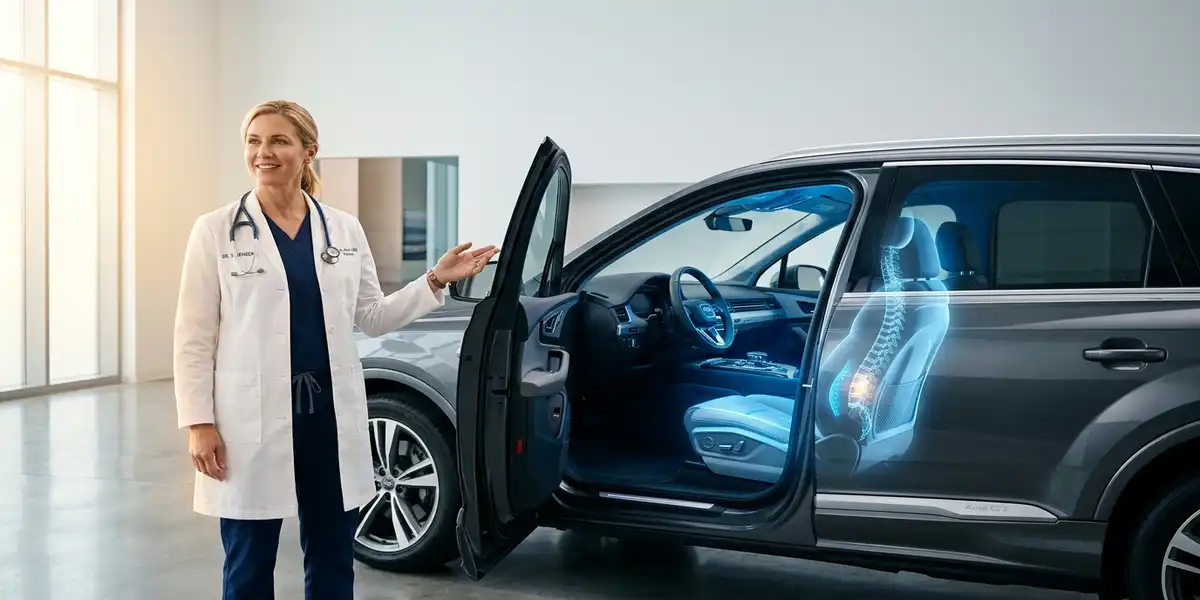
Reviewed by an MD
Horsepower will not put you in a clinic. Twelve months in the wrong seat will. Every vehicle here is assessed across seven ergonomic domains — using published specifications, ergonomic research and owner-reported data — and given one number: the MD Comfort Score.
A comparative editorial score informed by medical and ergonomic principles. Not every vehicle is evaluated in person — many assessments are research-based. Not a medical certification and not a guarantee of individual comfort.
Start here
Tell us what hurts. We'll point you at the assessments that matter for it.
Seat-base angle, lumbar depth and vibration transfer are the three things that decide this — and cheap seats fail all three.
Cars for back pain →Sciatic symptoms respond to hip-to-knee angle and seat-edge pressure far more than to how soft the cushion feels.
Cars for sciatica →After a hip or knee replacement, sill height and seat-hip height difference matter more than any other specification.
Accessories & fixes →Latest assessments
The full ranked list, scored domain by domain — from budget hatchbacks to long-haul SUVs.

Eight hours seated is a genuine clot risk. What to pack, when to stop, and which cabins make it easier.

00/100
A daily family hauler your spine notices long before your mechanic does.

00/100
Strong seat geometry, one recurring complaint about lumbar depth on lower trims.

00/100
EV ride quality changes the vibration picture entirely. Whether that helps depends on the seat.

00/100
Sport trim, firmer damping. Good for feedback, less forgiving over broken road surfaces.

The methodology
Each vehicle is assessed against the same seven criteria, weighted for how strongly each one predicts musculoskeletal complaints in drivers. Assessments draw on manufacturer specifications, published ergonomic and clinical research, and owner-reported experience. Where a vehicle has been evaluated in person, the review says so — otherwise the assessment is research-based.
Depth, height adjustability, and whether the curve actually meets the lumbar spine or sits above it.
Cushion tilt, thigh support length, and the range of adjustment available across trim levels.
Sill height, seat-to-hip height difference, door aperture. Decisive after hip or knee surgery.
Whole-body vibration transfer through the seat base — an established contributor to low back pain.
Pedal, wheel and seat relationship, and whether a neutral posture is reachable without compromise.
How the cabin performs past the two-hour mark, when static loading and circulation become the issue.
Ventilated and heated seats, massage function, memory settings — scored on real effect, not spec sheets.
This site publishes general educational information about vehicle ergonomics and driver comfort. It is not medical advice, does not create a doctor–patient relationship, and must not replace assessment by your own clinician. Scores are comparative editorial judgements: not every vehicle is evaluated in person, and many assessments are based on published specifications, ergonomic research and owner-reported data. If you have back pain, sciatica or a post-surgical restriction, speak to a qualified professional before making decisions. Some links earn a commission at no cost to you; this never affects a score. Medical disclaimer · Editorial policy