

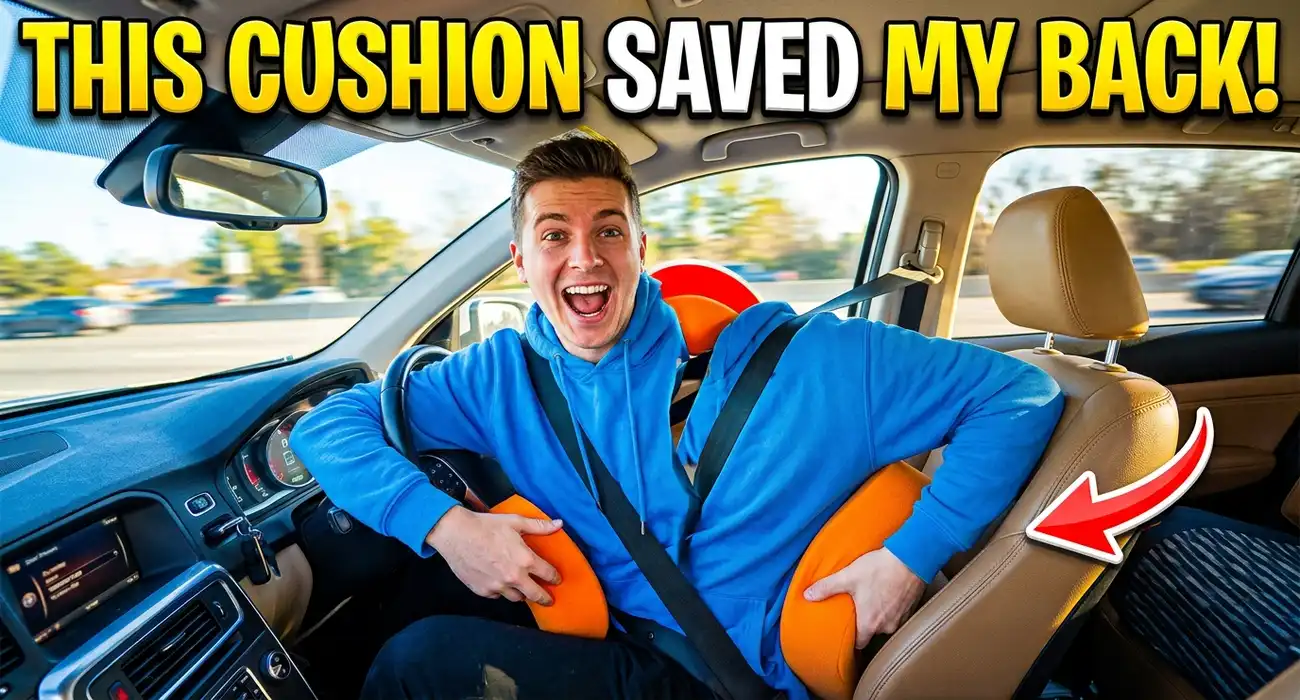
Summer road trips promise open roads and easy miles, but long hours in a seat create a real medical risk that most travel blogs never mention. Road trip DVT prevention deserves the same attention as your playlist and your snack bag, because deep vein thrombosis and chronic back pain both start the same way: with a body that sits still for too long.
I built this guide the way I build every MD Comfort Score™ article on this site — by combining clinical reasoning with real driving experience. [Bracketed personal anecdote: On a recent nine-hour coastal drive, I noticed my ankles swelling by hour five and my lower back tightening by hour seven, which is exactly the pattern that pushes healthy travelers toward vascular and musculoskeletal complaints.] That drive became the starting point for this article. Below, you get a practical road trip health kit you can assemble in one trip to the pharmacy, plus a ranked list of the best road-trip cars for preventing DVT and back pain, scored using our MD Comfort Score™ framework.
Why Road Trip DVT Prevention Matters More Than You Think

Deep vein thrombosis develops when blood pools in the deep veins of the legs, usually the calves, and forms a clot. Long car rides create the exact conditions that encourage clot formation: prolonged immobility, bent hip and knee joints, and reduced calf muscle activity. The calf muscles normally act as a pump that pushes blood back toward the heart. When you sit motionless for hours, that pump stops working, and blood flow slows in the deep veins.
Medical literature commonly refers to this phenomenon in the context of air travel as “economy class syndrome,” but researchers increasingly recognize that car travel carries similar risk when trip duration stretches past four hours. The Cleveland Clinic explains that immobility during long-distance travel raises clot risk regardless of the mode of transport, since the underlying mechanism is stillness, not altitude or cabin pressure. A road trip that keeps you seated for eight or ten hours without a break carries genuine cardiovascular risk, not just discomfort.
Back pain follows a related but distinct mechanism. Seated posture compresses the lumbar discs more than standing or walking does, and poor lumbar support forces the lower back muscles to work overtime to keep the spine stable. Combine that with vibration from the road surface and the static hip-flexor position, and a long drive becomes a slow-motion strain injury for many travelers.
Who Faces the Highest Risk on Long Drives
Not every traveler carries equal risk, and recognizing your own risk profile changes how seriously you should take this checklist.
- Travelers over 60 face naturally reduced vein elasticity and slower circulation.
- Anyone with a history of blood clots, varicose veins, or recent surgery carries substantially elevated DVT risk during prolonged sitting.
- Pregnant travelers experience increased clotting tendency due to hormonal changes, making road trip DVT prevention especially important during pregnancy.
- Smokers and travelers with obesity face compounded circulation risk.
- Anyone on hormonal birth control or hormone replacement therapy should take extra precautions, since estrogen increases clotting factors.
- People with existing lower back conditions, including herniated discs or spinal stenosis, notice pain escalate faster on long drives.
If you fall into one or more of these categories, treat the checklist below as essential rather than optional, and talk to your physician before a long trip if you have a personal or family history of clotting disorders.
The Road Trip Health Kit: What to Pack and Why
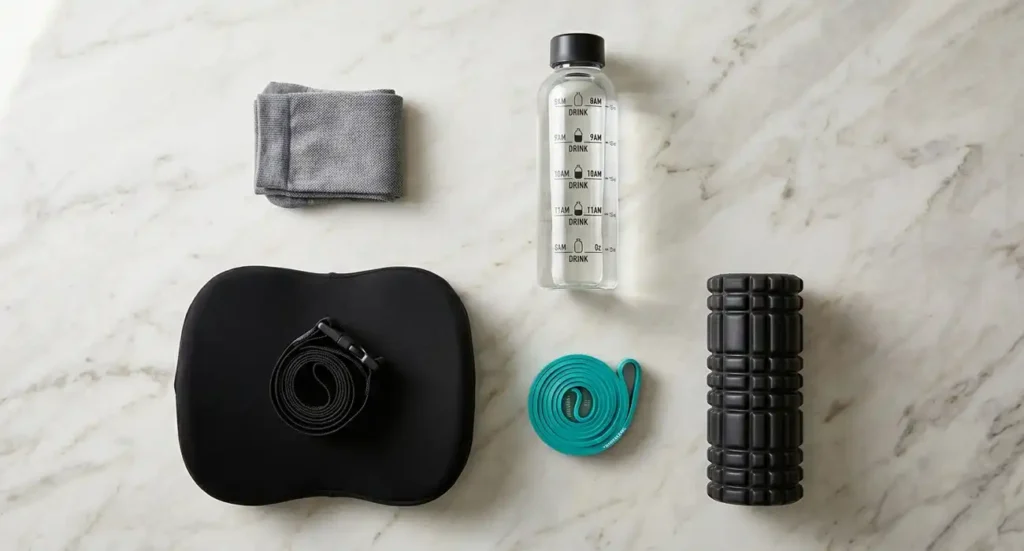
A proper road trip health kit takes ten minutes to assemble and fits in a single tote bag. Each item below addresses a specific mechanism behind DVT or back pain, so this isn’t a generic packing list — it’s a targeted medical countermeasure kit.
1. Compression Socks (15–20 mmHg)
Graduated compression socks apply steady pressure to the lower leg, which helps push blood back toward the heart and counteracts the pooling that happens when your calf muscles stay inactive. Choose a moderate compression level (15–20 mmHg) for general travel use, and go higher only under a doctor’s guidance. Put them on before you get in the car, not after your legs already feel heavy.
2. A Lumbar Support Cushion
A portable lumbar cushion maintains the natural inward curve of your lower spine, which reduces disc compression and takes pressure off the muscles that stabilize your back. Look for a cushion with an adjustable strap so it stays in place against factory seats that lack built-in lumbar support.
3. A Hydration Bottle with Time Markers
Dehydration thickens the blood slightly and can make it more prone to clotting, so steady water intake supports healthy circulation throughout a long drive. A bottle with time markers keeps you drinking on schedule instead of forgetting for hours at a stretch.
4. A Resistance Band or Small Foam Roller
Keep a light resistance band in the door pocket for ankle pumps and calf stretches during rest stops. Foam rollers work well on hamstrings and the IT band, both of which tighten during prolonged sitting and pull on the lower back.
5. A Seat Wedge Cushion
A wedge cushion tilts the pelvis slightly forward, which reduces slouching and keeps the spine in a more neutral position over long distances. This single item often makes the biggest difference for travelers with existing lower back pain.
6. Low-Dose Aspirin (Only With Physician Approval)
Some physicians recommend low-dose aspirin before long trips for patients with elevated clot risk, since aspirin reduces platelet aggregation. This step requires an actual conversation with your doctor, since aspirin carries bleeding risk and isn’t appropriate for everyone. Never start aspirin for travel purposes without medical guidance.
7. A Portable Ankle Exerciser or Footrest
Small pedal-style exercisers let passengers keep their calf muscles active even while seated, which directly supports the venous pump mechanism that prevents blood pooling.
The Movement Protocol: Your Kit Needs a Routine
Packing the kit solves half the problem; using it on a schedule solves the rest. The CDC recommends breaking up long trips with regular movement and staying hydrated to reduce clot risk, and that guidance applies directly to road trips, not just flights.
Follow this simple protocol on any drive longer than three hours:
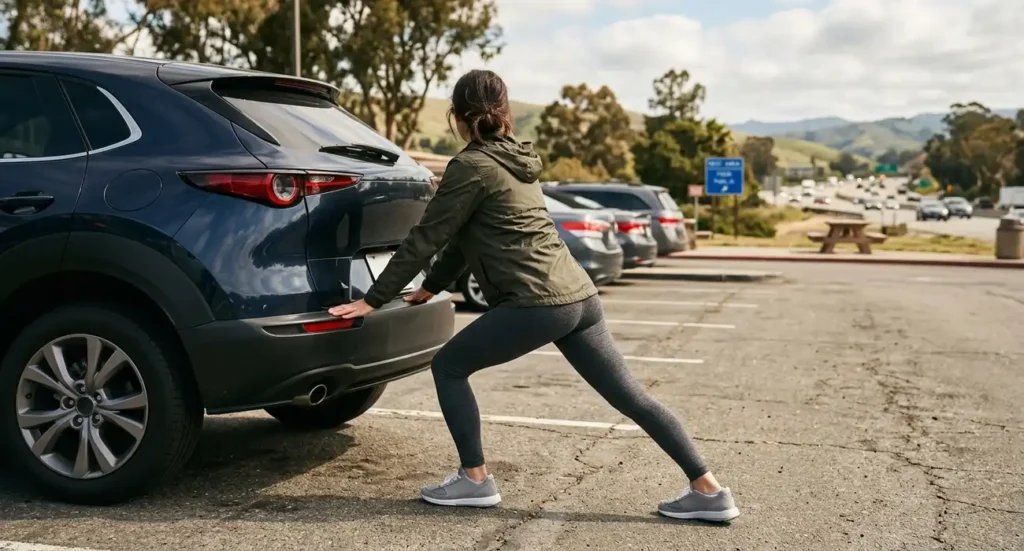
- Stop every 90 minutes to two hours. Get out of the car and walk for at least five minutes. Walking activates the calf muscle pump far more effectively than any seated exercise.
- Do ankle pumps every 20–30 minutes while seated. Flex your foot up and down 10–15 times. This small movement keeps blood moving in the deep veins even between stops.
- Shift your seat position periodically. Recline angle, seat height, and lumbar support position all interact with your posture, so small adjustments every hour prevent any single muscle group from staying under constant load.
- Rotate drivers when possible. Passengers can stretch and move more freely than drivers, so sharing the driving load reduces total immobile time for each person.
- Avoid alcohol and minimize caffeine excess during the drive. Alcohol contributes to dehydration, and excess caffeine can worsen restlessness without addressing circulation.
Best Road-Trip Cars for Preventing DVT and Back Pain: MD Comfort Score™ Rankings
Car choice genuinely changes your physical risk on a long drive, because seat design, cabin space, and ride quality directly affect how much your body compensates for a bad setup. Our MD Comfort Score™ framework rates vehicles on lumbar support quality, seat bolster design, legroom for ankle and knee movement, ride vibration at highway speed, and cabin noise, since all five factors influence fatigue, circulation, and spinal load on long drives.
1. Subaru Outback
The Outback earns a strong MD Comfort Score™ because of its wide door openings and low step-in height, which make it easy to get in and out for the frequent movement breaks that road trip DVT prevention requires. The seats offer solid factory lumbar support, and rear passengers get enough legroom to shift position without cramping.
2. Toyota Grand Highlander
Ample cabin width lets passengers stretch their legs and perform ankle pumps without bumping the seat in front of them. The Grand Highlander’s smooth ride reduces the vibration load on the lower back over long highway stretches, which matters more than most buyers realize on eight-plus-hour drives.
3. Hyundai Tucson Hybrid
The Tucson Hybrid combines a quiet cabin with genuinely supportive seat bolsters, and its highway driving assist reduces the postural bracing that drivers unconsciously do during long stretches of manual steering correction. Less bracing means less lower back tension by the end of the day.
4. Honda CR-V Hybrid
The CR-V Hybrid’s seat design holds up well over multi-hour stretches, and its high seating position keeps hips and knees at a healthier angle than low-slung sedans, which reduces hip flexor tightness that often radiates into lower back pain.
5. Chrysler Pacifica Hybrid
For families managing road trip DVT prevention across multiple passengers, the Pacifica’s stow-and-go seating and wide cabin make it easy for kids and adults alike to shift position, stretch, and use resistance bands or portable exercisers during the drive.
6. Kia Telluride
The Telluride pairs a genuinely comfortable driver’s seat with a smooth ride quality that limits the constant micro-jolts that tire out back muscles on rough highway sections. Rear passengers benefit from generous legroom, which supports in-seat stretching between stops.
For a deeper dive into one of the vehicles on this list, read our full Toyota Highlander health-focused review, which breaks down its MD Comfort Score™ across seat ergonomics, cabin noise, and ride quality. If back pain is your primary concern rather than DVT risk specifically, our 50 Best Cars for Back Pain in 2026 ranking goes into much greater depth on lumbar support and seat design across a wider range of vehicles.
Warning Signs You Should Never Ignore
Most road trip discomfort resolves with movement and rest, but certain symptoms signal a medical emergency and require immediate attention rather than a wait-and-see approach.
Seek emergency care immediately if you notice:
- Swelling in one leg that appears suddenly and doesn’t improve with elevation
- Warmth, redness, or tenderness in the calf, especially on one side only
- Sudden shortness of breath, chest pain, or a rapid heartbeat after a long drive
- Coughing up blood
These symptoms can indicate a deep vein thrombosis that has progressed toward a pulmonary embolism, which becomes life-threatening without prompt treatment. Don’t wait until you get home to seek care if these symptoms appear during or shortly after a trip.
Putting It All Together
Road trip DVT prevention doesn’t require an elaborate medical setup, but it does require intention. Pack a kit built around real physiological mechanisms rather than generic comfort items, follow a movement protocol every 90 minutes, and choose a vehicle that supports your body rather than working against it. The travelers who arrive at their destination feeling good, rather than stiff and swollen, are almost always the ones who treated circulation and posture as seriously as they treated their route planning.
I’ve applied this exact protocol on drives ranging from four hours to a full day, and the difference between a trip with a kit and routine versus one without is noticeable by the second rest stop. [Bracketed personal anecdote: The single change that made the biggest difference in my own experience was setting a phone timer for movement breaks, since good intentions alone rarely survive the pull of making good time on the highway.]
Medical Disclaimer
This article is intended for general educational purposes only and does not constitute personalized medical advice. The information provided should not replace consultation with a qualified healthcare provider. Individuals with a personal or family history of blood clots, cardiovascular disease, pregnancy, recent surgery, or other risk factors should consult their physician before undertaking long road trips or starting any new supplement, medication, or exercise routine, including low-dose aspirin. If you experience symptoms of deep vein thrombosis or pulmonary embolism, seek emergency medical care immediately. This content is written by a licensed physician but does not establish a doctor-patient relationship with readers.
About Us
AutoHealthReviewMD reviews vehicles through a medical and wellness lens, using our proprietary MD Comfort Score™ framework to evaluate how cars affect the human body over real-world driving conditions. Written by a physician with a specific interest in sports medicine and human performance, our reviews go beyond horsepower and infotainment to answer the question most car sites ignore: how does this vehicle actually feel on your body after hours behind the wheel? We combine clinical reasoning with hands-on driving experience to help travelers, commuters, and families choose vehicles that support their health, not just their itinerary.
Suggested image alt text:
- Featured image: “Person adjusting lumbar support cushion in car seat during road trip”
- Health kit flat-lay: “Road trip health kit with compression socks, lumbar cushion, and water bottle”
- Car interior: “Spacious SUV cabin with supportive seats for long-distance road trip comfort”
- Rest stop stretch: “Traveler stretching legs at rest stop to prevent DVT during road trip”