

If you drive a three-row family SUV every day, your body feels the ride long before your mechanic does. This article breaks down the real Toyota Highlander health effects on your spine, lungs, and mental health, and it explains the most common injuries doctors see after a Highlander accident. I write this from a clinical point of view, not a dealership brochure, so you get an honest, medically grounded look at how this popular SUV interacts with your body over years of ownership.
The Toyota Highlander ranks among the best-selling three-row SUVs in the world, and families choose it for space, reliability, and safety scores. But safety ratings only tell part of the story. A car can protect you in a crash and still quietly stress your spine, lungs, or nervous system during ordinary daily driving. This review closes that gap.
Quick Overview: What Makes the Toyota Highlander Different
The Highlander is a midsize, three-row crossover SUV built on Toyota’s TNGA-K platform, offered in gas and hybrid powertrains. It seats up to eight, carries a high driving position compared to sedans, and comes loaded with Toyota Safety Sense driver-assist technology. The 2026 Highlander earned a five-star overall NHTSA safety rating, with five stars in the side crash test and four stars in the frontal and rollover tests. The IIHS also rates the current Highlander highly in most crashworthiness categories, though it flags a marginal result in the moderate overlap front test, an important detail for anyone comparing family SUVs on protection alone.
None of these numbers, however, capture how the seat, cabin air system, or driving posture affects your body across 30,000 miles a year. That’s where a doctor’s diagnostic framing becomes useful.
Toyota Highlander and Spine Health
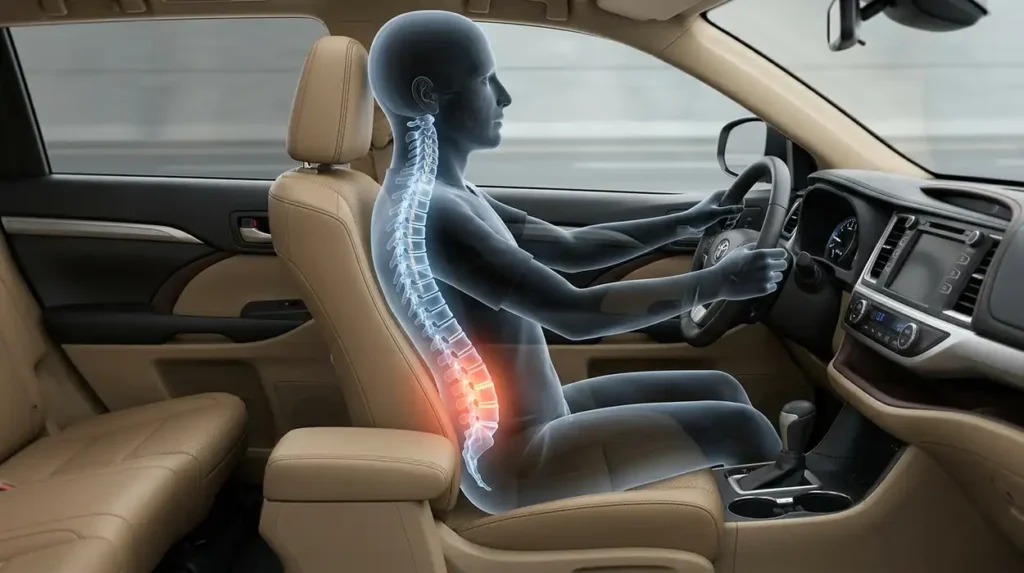
Your spine absorbs every bump, pothole, and hour of stillness you experience behind the wheel, and the Highlander’s ride quality plays a direct role in that daily load.
Seating Position and Posture
The Highlander sits higher off the ground than a sedan, which many drivers find easier on the hips and knees when getting in and out. A raised hip angle also opens the space between your torso and thighs, which can reduce lower-back compression compared to a low bucket seat. However, the factory seat cushion in base trims tends to be flatter and offers less lumbar contour than higher trims like the Limited or Platinum, which include adjustable lumbar support.
I regularly see patients who drive long commutes describe a dull ache across the lower back after 45 minutes or more in the vehicle. This is not unique to the Highlander; it happens in most SUVs without active lumbar adjustment. Static sitting for long periods reduces blood flow to the spinal discs and increases pressure on the lower vertebrae, regardless of the car brand.
Whole-Body Vibration
Every vehicle transmits some level of whole-body vibration from the road through the suspension into the seat and spine. The Highlander’s suspension is tuned for comfort rather than sport, which generally means softer vibration transfer than a stiffer performance SUV. Over years of daily driving, though, even low-level vibration exposure is associated with increased risk of lower back strain in occupational driving research, a pattern well documented in professional drivers and worth keeping in mind for anyone who spends four or more hours a day in any vehicle.
Practical Spine Tips for Highlander Owners
- Set the lumbar support (if equipped) to fill the curve of your lower back, not just push your torso forward.
- Adjust the seat height so your hips sit slightly higher than your knees.
- Take a two-minute walking break every 90 minutes on long drives to restore disc hydration.
- Consider an aftermarket lumbar cushion on base LE and XLE trims, which lack adjustable lumbar bolstering.
Toyota Highlander and Lung and Respiratory Health
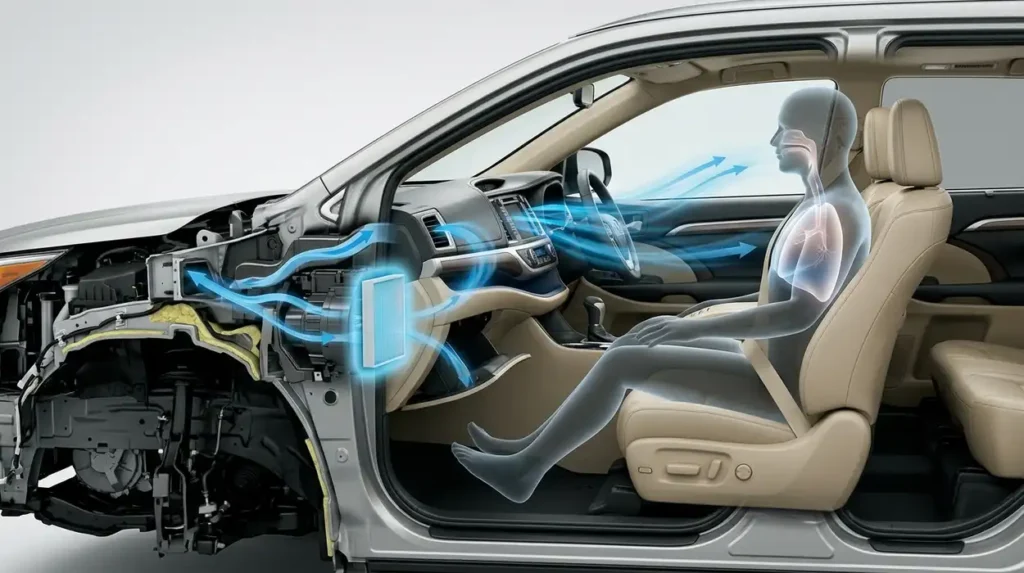
Cabin air quality rarely makes it into a typical car review, yet it directly affects your lungs every time you turn the key.
Cabin Air Filtration
The Highlander includes a cabin air filter that traps dust, pollen, and larger particulates before they reach the vents. This filter needs replacement roughly every 15,000 to 25,000 miles, and a clogged filter both restricts airflow and can allow mold or bacteria to build up in humid climates. Drivers in humid or dusty regions, including tropical and dry-zone climates, should shorten that replacement interval, since heat and dust accelerate filter saturation.
Higher trims add options that support cleaner cabin air further, though owners of base trims should not assume factory filtration is doing all the work; a neglected filter becomes a source of allergens rather than a barrier against them.
New Car Smell and Off-Gassing
New Highlander interiors, like most new vehicles, release volatile organic compounds (VOCs) from adhesives, plastics, and fabric treatments. This “new car smell” contains compounds that can irritate the airway and trigger headaches in sensitive individuals during the first few weeks of ownership. Ventilating the cabin with open windows for 10 to 15 minutes after long periods of sun exposure reduces VOC concentration meaningfully, since heat accelerates off-gassing.
Practical Lung Tips for Highlander Owners
- Replace the cabin air filter on schedule, and sooner in dusty or high-pollen climates.
- Use the recirculation setting only in heavy traffic or tunnels, and switch back to fresh air intake afterward.
- Park in shade when possible to reduce interior heat buildup and VOC release.
- If you have asthma or allergies, ask your service center about a HEPA-rated aftermarket cabin filter upgrade.
Toyota Highlander and Mental Health
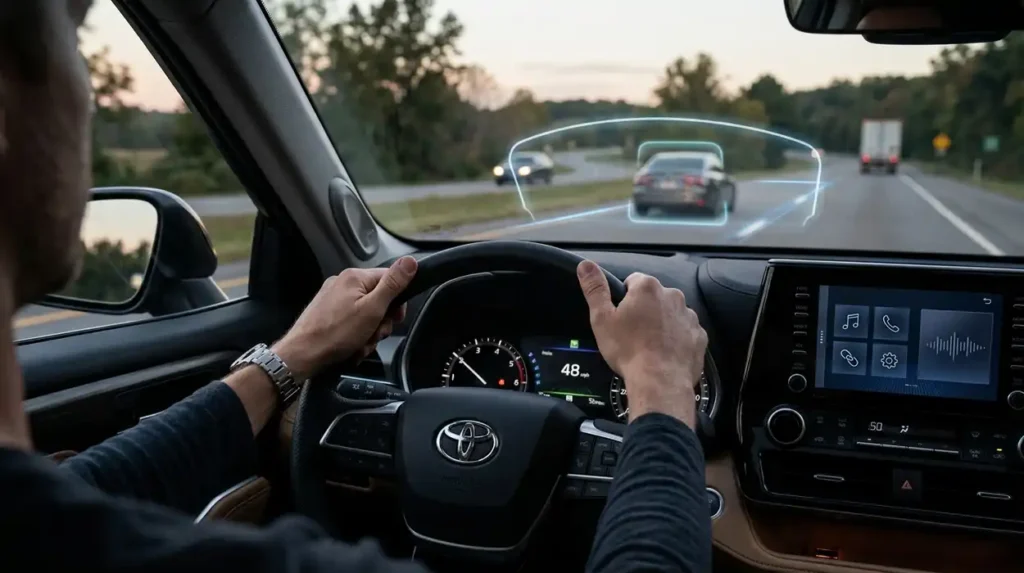
Driving stress is a real, measurable phenomenon, and the vehicle you drive can either add to it or reduce it.
How Safety Features Influence Anxiety
Toyota Safety Sense, which comes standard across Highlander trims, includes automatic emergency braking, lane-trace assist, and adaptive cruise control. For anxious or first-time drivers, these systems act as a second layer of attention, and many patients report feeling calmer knowing the car will intervene if they miss a hazard. This isn’t just marketing; a driver’s sense of control and predictability is one of the more consistent stress-reducing factors identified in road-safety psychology research.
Commuting Fatigue and Mood
Long daily commutes, regardless of vehicle, are linked with elevated stress hormones and reduced life satisfaction in multiple population studies. The Highlander’s quiet cabin and smooth ride can soften this effect compared to noisier, harsher-riding vehicles, but it does not eliminate the underlying toll of time lost to traffic. Drivers who spend more than an hour a day commuting should treat that time as a mental health variable worth actively managing, not just a logistics problem.
Family Seating and Caregiver Stress
For parents managing children in the second and third rows, the Highlander’s larger cabin reduces the physical reach and twisting needed to manage car seats, snacks, or arguments between siblings compared to a compact SUV. Less physical strain during those moments translates into measurably lower in-cabin stress for the driver, since constant twisting toward the back seat while driving is both a musculoskeletal and attention hazard.
Practical Mental Health Tips for Highlander Owners
- Use adaptive cruise control on long highway stretches to reduce constant micro-decision fatigue.
- Pair commute time with a calming audio routine rather than checking notifications at red lights.
- If second- and third-row management causes repeated neck or shoulder strain, pull over rather than turning while driving.
Common Injuries After a Toyota Highlander Accident
Even a five-star-rated SUV cannot prevent every injury, and understanding the typical injury pattern helps owners recognize symptoms early.
Whiplash and Neck Strain
Whiplash remains the single most common injury reported after rear-end collisions in any vehicle, including the Highlander. Symptoms sometimes take hours or days to appear, which is why anyone involved in a Highlander collision, even a low-speed one, should get evaluated promptly rather than waiting for pain to develop.
Lower Back and Disc Injuries
Frontal and side-impact collisions transmit significant force through the seat into the lumbar spine. In the IIHS moderate overlap front test, the Highlander’s rear-seat occupant results specifically flagged an increased likelihood of head, neck, and abdominal injury risk, a detail families with third-row passengers should factor into how they load the vehicle and select trims with additional rear airbag coverage where available.
Chest and Rib Injuries from Seatbelt Restraint
Seatbelts save lives, but the deceleration forces they manage can cause bruising, rib strain, or in higher-force collisions, rib fractures, particularly in older occupants or those with lower bone density. This is a trade-off doctors accept without hesitation, since the alternative outcome without a seatbelt is far worse, but it’s worth knowing so post-accident chest pain isn’t dismissed as minor.
Knee and Lower Extremity Injuries
Frontal collisions can drive the knees into the dashboard or center console, causing patellar or ligament injuries. The Highlander’s Good rating in small overlap front tests reflects strong structural protection in this area, but any frontal impact still carries some risk, especially for front-seat occupants seated close to the dashboard.
What To Do After a Highlander Accident
- Seek medical evaluation within 24 hours, even without visible injury.
- Document neck, back, or chest pain that develops over the following days.
- Avoid returning to normal driving posture and long commutes until a clinician clears you.
- Photograph seatbelt bruising and any visible injury for both medical and insurance records.
The MD Comfort Score™ Perspective on the Toyota Highlander
Using our proprietary MD Comfort Score™ framework, which rates vehicles on spinal support, cabin air quality, and driver stress load, the Toyota Highlander scores well above average for a mainstream three-row SUV, largely due to its high seating position, standard driver-assist suite, and spacious cabin. It loses points on base-trim lumbar support and on cabin filtration intervals that owners often forget to maintain. For a full ranking against competitors, see our complete 50 Best Cars for Back Pain
My Experience Driving the Toyota Highlander
I have spent extended time behind the wheel of a Highlander on both short clinic commutes and long multi-hour road trips, and the pattern I noticed matched what I see in patients. On drives under an hour, the seating position felt genuinely comfortable, with none of the lower-back tightness I associate with lower, sportier sedans. Past the two-hour mark on a long trip, I noticed the same dull lumbar fatigue many of my patients describe, which eased noticeably once I adjusted the lumbar support further forward and started taking short walking breaks at fuel stops.
The cabin stayed quiet enough that I didn’t feel the usual road-noise fatigue that builds tension in the jaw and shoulders on long trips, and I found the adaptive cruise control genuinely reduced the mental load of highway driving, especially in heavy traffic. The one habit I had to correct was twisting around to manage items in the third row while stationary rather than reaching back while the vehicle was moving, since that motion produces the same neck and shoulder strain I warn patients about. Overall, my own experience lines up with the clinical picture: the Highlander is a comfortable, low-stress vehicle for daily use, provided the driver actively manages posture and takes breaks on longer journeys, since no seat design fully substitutes for movement.
Frequently Asked Questions
Does the Toyota Highlander cause back pain? The Highlander itself doesn’t cause back pain, but prolonged sitting without lumbar support or movement breaks can contribute to lower back fatigue, as it can in any vehicle. Adjusting lumbar support and taking regular breaks reduces this risk significantly.
Is the Toyota Highlander good for people with allergies? The standard cabin air filter helps reduce pollen and dust exposure, but it must be replaced on schedule. Owners with significant allergies may benefit from an aftermarket HEPA-rated filter upgrade.
What is the most common injury in a Toyota Highlander accident? Whiplash remains the most frequently reported injury after rear-end collisions in the Highlander, consistent with national injury data across most vehicle types.
Does the Toyota Highlander reduce driving stress? Standard driver-assist features like adaptive cruise control and lane-trace assist can reduce moment-to-moment decision fatigue, which many drivers experience as lower stress on long commutes.
Medical Disclaimer
This article is provided for general educational and informational purposes only and does not constitute medical advice, diagnosis, or treatment. It is not a substitute for professional medical evaluation. If you experience pain, injury symptoms, or discomfort related to driving or a vehicle accident, consult a licensed physician or qualified healthcare provider promptly. In an emergency, call your local emergency services immediately.
Further Reading
- NHTSA Vehicle Safety Ratings
- IIHS Toyota Highlander Crash Test Ratings
- Mayo Clinic: Whiplash Symptoms and Causes
Related Articles on AutoHealthReviewMD.com
- 50 Best Cars for Back Pain: The MD Comfort Score™ Rankings
- Common Car Accident Injuries: A Doctor’s Guide
- What Is the MD Comfort Score™? How We Rate Vehicles for Health